
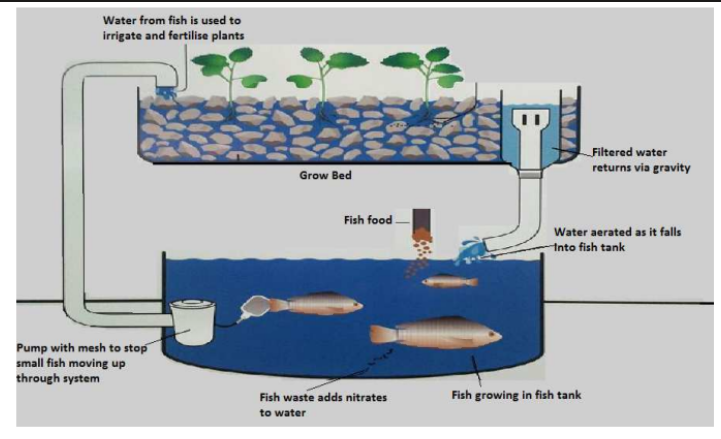
South Africa is turning to aquaponics as a climate-smart approach to food security, bringing fish and vegetable production into schools, farms and urban communities. The system combines aquaculture with hydroponics: fish waste provides nutrients for plants, while the plants naturally filter the water before it is returned to the fish tanks. This closed-loop approach can use up to 90% less water than conventional agriculture, making it particularly valuable in drought-prone regions. INMED South Africa’s programmes have reached more than 158,000 people, while aquaponics education has so far been introduced in 10 schools and reached more than 7,300 learners.
The initiative is also helping connect education, food production and climate resilience. Aquaponics was introduced into South Africa’s school curriculum following a 2019 government announcement, with schools using practical systems to teach students about sustainable agriculture while producing vegetables and fish. The technology is especially useful where land, water and fertile soil are limited, and South Africa’s agricultural sector is increasingly exposed to drought and climate shocks. Researchers have also identified aquaponics as a promising option for producing food in urban and peri-urban spaces, including schools and community farms. By reducing water use, recycling nutrients and enabling local food production, aquaponics could become an important part of more resilient and resource-efficient food systems in a changing climate. More