
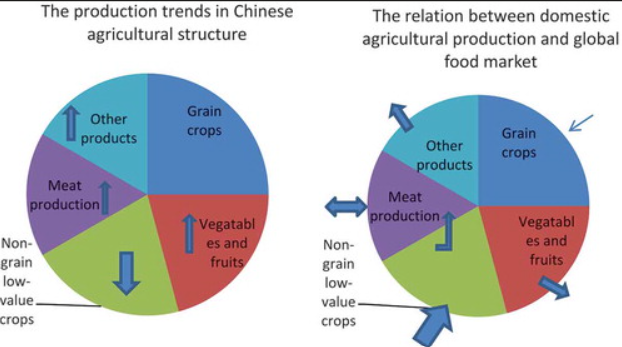
China is changing the way it thinks about protein, and the impact could be felt across global agricultural markets. For years, China’s growing appetite for pork, poultry and other animal products helped drive enormous demand for soybeans, maize and other animal feed, making China one of the world’s biggest agricultural importers. But now Beijing is increasingly focusing on food security, domestic production and reducing its dependence on imported feed. China’s soybean imports still reached a record 111.8 million tonnes in 2025, but projections suggest this could fall to around 82.6 million tonnes by 2035. This does not mean China will suddenly stop importing food, but it signals a possible change in the global food equation, particularly for major soybean exporters such as Brazil and the United States.
The bigger story is what happens if China starts producing more protein while relying less on imported feed. A shift towards importing more meat and reducing feed imports could change demand for soybeans and maize, reshape agricultural trade routes and influence what farmers choose to grow in countries that currently depend heavily on Chinese demand. It could also change land and water pressures within China as the country tries to produce more food at home. China’s protein transition is therefore not just about what appears on Chinese dinner tables—it could influence farms, commodities, trade and food security around the world. The global agricultural market may be entering a period where the question is no longer simply how much China wants to eat, but how China chooses to produce its protein. More