
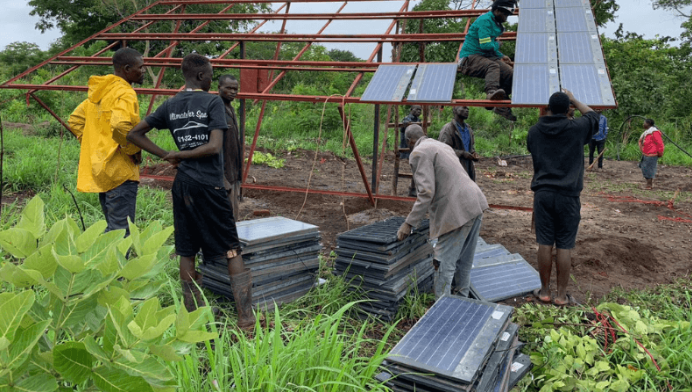
Malawi has taken an important step towards a more reliable clean-energy future by installing its first utility-scale battery energy storage system, a 20 MW/40 MWh facility in Lilongwe. Commissioned by the Electricity Supply Corporation of Malawi (ESCOM) in July 2026, the project cost around US$20.25 million and is designed to store electricity when supply is high and release it when demand increases. This is particularly significant for Malawi, where hydropower dominates electricity generation and leaves the country highly exposed to drought, changing rainfall patterns and declining water levels. The new battery can provide grid stability, reduce pressure during peak demand and make it easier to integrate more solar power into the national electricity system. For a country where electricity access remains limited, energy storage is not simply a technological upgrade—it could become an important tool for strengthening energy security and reducing dependence on a vulnerable power system.
The bigger question, however, is whether Malawi can turn this battery breakthrough into a wider energy transformation. Solar power currently contributes around 100 MW to Malawi’s approximately 580 MW electricity system, while the government aims to increase electricity access to 70% of the population by 2030. Battery storage can help ensure that solar energy generated during the day is available when the sun goes down, but storage alone cannot solve Malawi’s electricity challenges. The country will also need stronger transmission networks, more renewable generation, investment in rural electrification and policies that ensure clean electricity reaches communities rather than remaining concentrated around major cities. Malawi has already demonstrated the potential of solar-plus-storage through the Golomoti solar project, which combines 20 MW of solar generation with a 5 MW battery. The new Lilongwe battery therefore represents more than another infrastructure project—it is a test of whether African countries can move from simply producing renewable energy to building resilient energy systems capable of storing, managing and delivering clean power when people need it most. More