
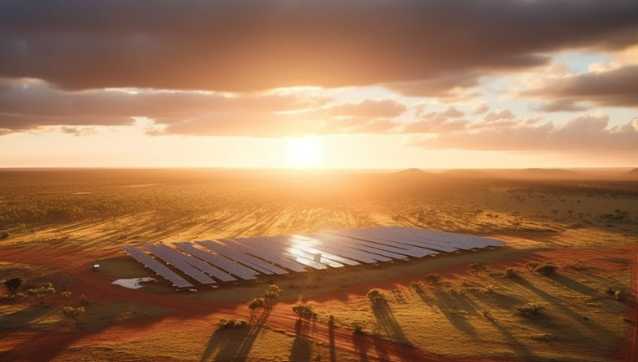
Australia is often called the sunniest continent on Earth, yet a large share of its solar potential remains underused—like a crop left unharvested. The country leads the world in rooftop solar adoption, with more than 3.5 million homes generating power, but much of this energy never reaches its full value. At times of peak sunshine, grids become saturated, forcing operators to curtail or switch off solar systems to maintain stability. In some regions, households are even paid little—or nothing—for excess electricity fed back into the grid, highlighting a mismatch between generation and storage capacity.
The core issue lies in infrastructure lagging behind ambition. Australia’s transmission networks, battery storage, and demand management systems have not scaled fast enough to absorb the surge in renewable energy. As a result, clean power is frequently wasted during the day, while fossil fuels still fill gaps at night. Experts estimate that without major investment in storage, smarter grids, and flexible energy use, a significant portion of renewable output will continue to be lost. The irony is stark: in a country rich with sunlight, the challenge is no longer how to generate energy—but how to capture, store, and use it efficiently. More