
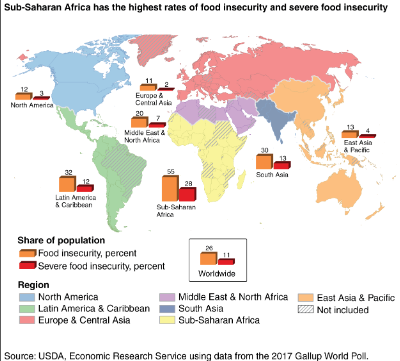
New climate-risk analysis finds that limiting global warming to 2°C may still trigger widespread and severe food insecurity across many more countries than previously expected. Researchers examining global crop yields and climate stressors warn that rising temperatures will intensify droughts, heatwaves, and rainfall variability, all of which directly reduce agricultural productivity. Key staple crops such as wheat, maize, and rice are particularly vulnerable, especially in already heat-stressed regions of Africa, South Asia, and parts of Latin America.
The study highlights that even relatively small increases in average global temperature can destabilise food systems through cascading effects—soil degradation, water scarcity, and disrupted planting seasons. Countries with limited adaptive capacity are expected to face the greatest risks, as import dependence rises and local production declines. Experts caution that while a 2°C target is often described as a benchmark for “safe” climate change, the analysis suggests it would still expose hundreds of millions of people to higher risks of hunger unless major investments are made in climate-resilient agriculture and global food distribution systems. More