
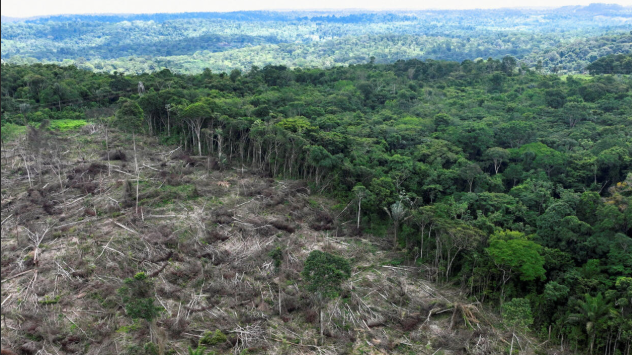
A recent study shows that cutting down forests is a major reason why rainfall in the Amazon is dropping. Scientists found that rain in parts of the southern Amazon has decreased by about 8–11% in recent decades, and more than half of that decline is directly linked to deforestation. Trees play a key role in creating rain by releasing moisture into the air, so when large areas are cleared, this natural cycle weakens. As a result, some regions are now seeing rainfall fall by several millimeters each year.
The impact goes beyond just the forest itself. With fewer trees, the flow of moisture across South America is reduced, which can affect weather patterns far beyond the Amazon. Dry seasons are becoming harsher, temperatures are rising, and droughts are becoming more frequent. Experts warn that if deforestation continues at this pace, the Amazon could reach a tipping point where it can no longer sustain itself as a rainforest, turning instead into a much drier landscape with serious consequences for wildlife, farming, and the global climate. More