
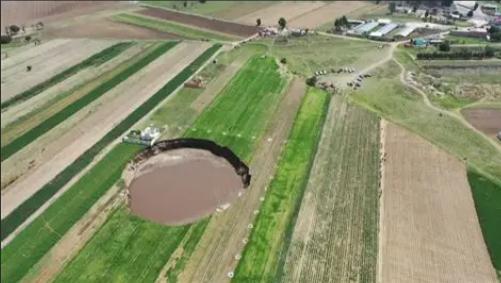
Turkey’s Konya Plain, one of the country’s most productive agricultural regions, is increasingly threatened by the sudden appearance of sinkholes as prolonged drought and intensive groundwater use destabilize the land. Hundreds of collapses have been recorded across farmlands that supply staple crops such as wheat, maize, and sugar beet. Scientists link the phenomenon to rapidly falling aquifer levels, driven by climate change and heavy irrigation demands, with groundwater in some areas dropping several metres each year. The widespread drilling of both licensed and illegal wells has further accelerated underground void formation, weakening the soil structure beneath cultivated fields.
For farmers, the sinkholes represent more than a geological anomaly—they are an escalating economic and safety risk. Entire plots of land are being lost overnight, agricultural machinery is endangered, and daily work is carried out under constant uncertainty. Experts warn that forecasting sinkhole formation remains extremely challenging, making prevention difficult without major changes in water management. As pressure mounts on already scarce water resources, the crisis in Konya is prompting renewed calls for stricter groundwater regulation and long-term strategies to safeguard both food production and rural livelihoods in Turkey’s agricultural heartland. More