
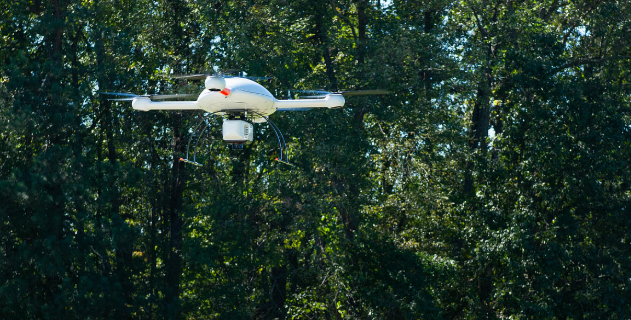
Japan is pioneering a new era of ecological recovery with advanced AI-powered drones capable of restoring forests at unprecedented speed. Using high-resolution LiDAR mapping, onboard machine learning, and soil-health analytics, these drones identify ideal planting spots and fire seed-pods with remarkable precision — enabling them to plant trees ten times faster than human-led efforts. Each biodegradable pod contains native seeds, nutrients, and mycorrhizal fungi, allowing newly planted trees to take root even in rugged, degraded landscapes. In early trials across wildfire-damaged regions in Kyushu and steep mountainous areas where human workers struggle to reach, drones achieved germination success rates above 80%, far exceeding many manual reforestation benchmarks.
The broader impact is equally transformative. Japan, which loses thousands of hectares of forest annually to typhoons, wildfires, pests, and aging timber plantations, sees this technology as a critical tool in meeting its 2050 net-zero targets and improving national biodiversity. Experts say the drone networks could restore hundreds of hectares per month, cut reforestation costs by up to 50%, and significantly accelerate climate-adaptation strategies in regions vulnerable to landslides and soil erosion. Global interest is already rising, with countries in Southeast Asia, Europe, and South America exploring similar drone-based reforestation systems. Japan’s model demonstrates a powerful truth for the planet: when advanced technology and ecological science meet, the path to healing forests becomes faster, smarter, and more scalable than ever before. More